Anodizing and Powder Coating: Choosing a Profile Finish
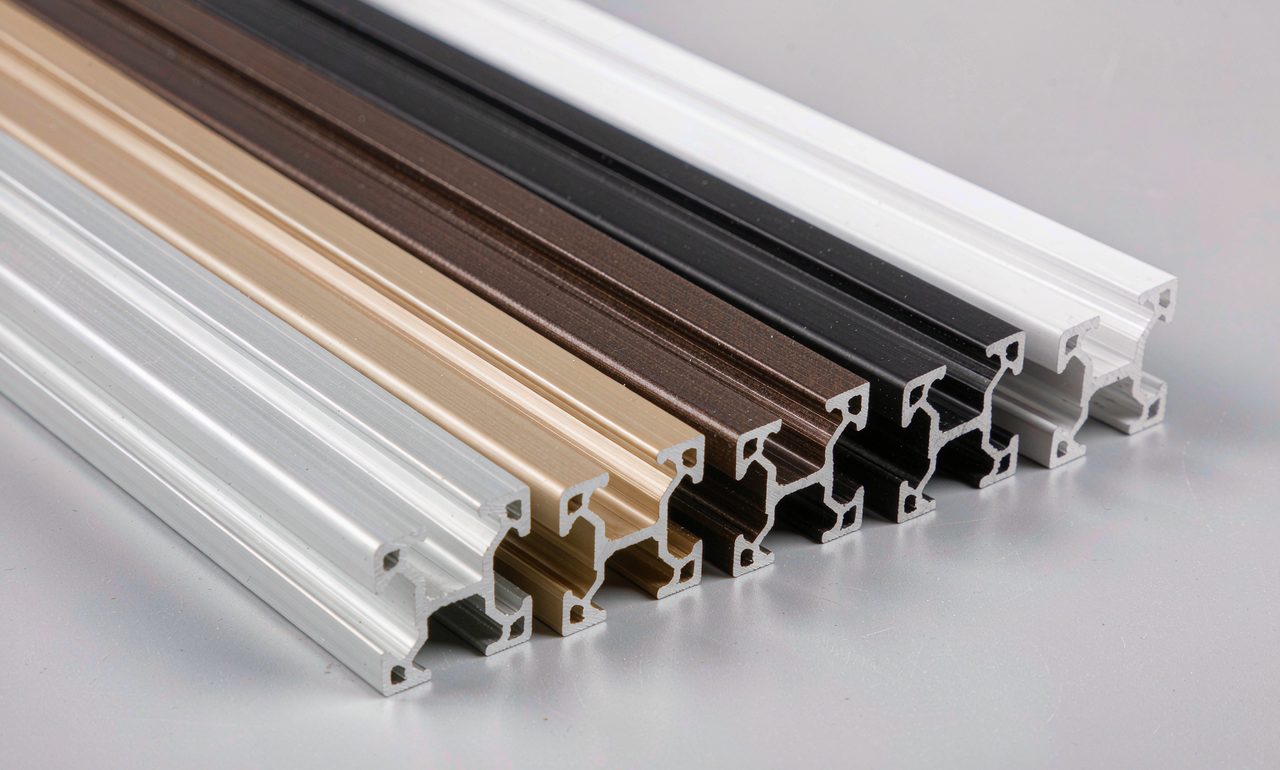
Surface finishing determines how a profile looks in a structure and how it behaves in service. Two common options — anodizing and powder coating — solve related but different tasks. This material explains the principle of each method, their differences and the questions worth agreeing with the manager before the commercial proposal is prepared. Numerical finish parameters are not given here.
Two finishing methods
Anodizing an aluminium profile is an electrochemical treatment that forms a protective oxide layer on the metal surface while preserving the product's metallic texture. Powder coating an aluminium profile is the application of a polymer composition followed by curing, producing a continuous finish with an agreed colour and texture. Both options are discussed when selecting a configuration; the specific finish is confirmed by the manager on request.
How the options differ
- Appearance. Anodizing keeps a pronounced metallic texture; powder coating gives an even coloured finish with an agreed gloss level.
- Colour. With anodizing the shade is tied to the metal and the treatment; with powder coating the colour is agreed with the customer. We do not publish a fixed list of shades or references to colour catalogues.
- Protective properties. Both methods form a protective layer; the requirements for it are determined by the operating conditions of the specific project and are clarified during agreement.
- Combining faces. For structures where the inner and outer faces look different, different finishes for the profile faces are discussed — the manager confirms this option.
- Repair and restoration. A damaged polymer finish and an oxide layer are restored in different ways; the procedure for your project is confirmed by the manager.
Which questions to agree before the quote
- Where will the structure be located: indoors, on a facade, in an entrance system?
- What appearance is required: metallic texture or a coloured finish?
- Does the colour need to match neighbouring interior or facade elements?
- Is a different finish required for the inner and outer faces of the profile?
- Are finish samples needed before the configuration is agreed?
Pass the answers to the manager together with the description of the structure — this lets the finish be included in the commercial proposal from the start, rather than added after the configuration is agreed.
What this material does not contain
We do not give layer thicknesses, coating classes, references to colour catalogues, warranty periods or numerical durability figures: these data relate to a specific finish and are confirmed on request. The material is not a product specification and does not replace agreeing the configuration. The manager confirms the list of available finishes and the terms for providing samples.
Frequently asked questions
How does anodizing differ from powder coating?
Anodizing forms an oxide layer on the metal surface and keeps the metallic texture; powder coating applies a polymer finish in an agreed colour. The choice depends on appearance and operating conditions.
Can you match a colour to an interior or facade?
Colour and texture are agreed on request. We do not publish a fixed list of shades; finish samples are discussed if needed.
Can the inner and outer faces be finished differently?
This option is discussed and confirmed by the manager before the commercial proposal is prepared.
Profile system catalogue
- Thermal-break profiles, casement systems
- Thermal-break profiles, sliding systems
- Casement systems without a thermal break
- Sliding systems without a thermal break
- Facade and curtain-wall profiles
- Industrial and universal profile
Reference materials
- How Aluminium Profile Extrusion Works
- How to Choose an Aluminium Profile for a Window, Door or Facade
Let us agree the finish for your project
Describe the structure and the appearance requirements — the manager will suggest a finish option and include it in the commercial proposal.
Request a finish selection consultationView the profile catalogue