How Aluminium Profile Extrusion Works
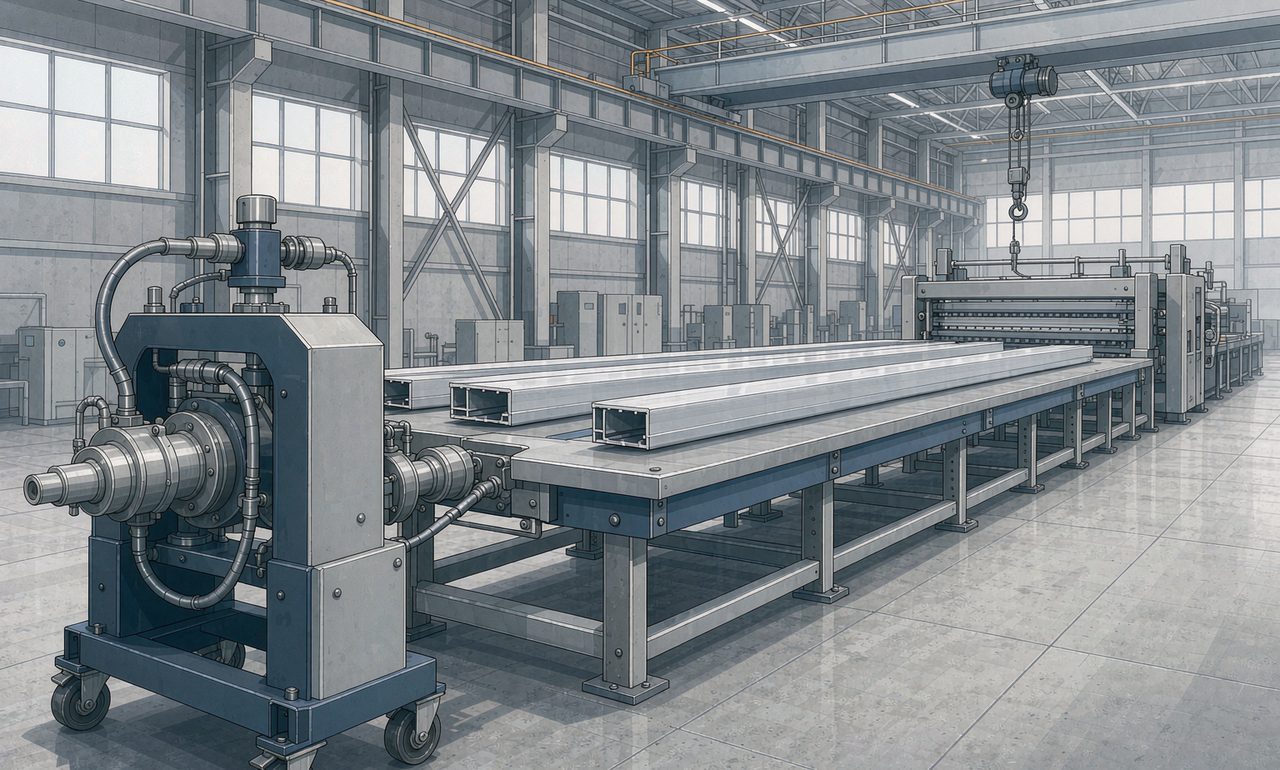
Extrusion is the basis of aluminium profile production: it is at this stage that the cross-section is formed, determining frame rigidity, hardware compatibility and the appearance of the finished structure. The material describes the sequence of operations from billet to shipment and helps the customer understand what data makes sense to send to the manufacturer with a drawing. The text is of a general technical nature and contains no numerical processing conditions.
Aluminium extrusion is a forming method in which a metal billet heated to a plastic state is pushed through a die with an opening of the required cross-section; the resulting long profile repeats the geometry of that opening. The die is therefore the main tool determining the configuration of the product: changing the die yields a different cross-section without changing the technology itself.
Stages of profile production
- Billet preparation — The incoming billet is checked and prepared for heating; its condition determines the stability of the geometry at the output.
- Heating — The billet is heated until the metal can deform plastically under pressure. The specific conditions depend on the series and are not given in this reference material.
- Pressing through the die — The billet is pushed through the die; the emerging profile has the cross-section set by the die opening.
- Cooling and straightening — The profile is cooled and straightened to keep its geometry along the length and reduce internal stresses.
- Cutting to length — The long length is cut into pieces whose length is agreed to the order and the conditions of subsequent assembly.
- Heat treatment — Applied when necessary and determined by the requirements of the specific series; conditions are not given in the reference text.
- Surface finishing — A protective and decorative coating is applied: anodizing and powder coating are discussed, with colour and texture agreed with the customer.
- Inspection and preparation for shipment — Geometry and appearance are checked, packaging is agreed and the batch is handed over for shipment; supply terms are set out in the commercial proposal.
Why the customer should understand this process
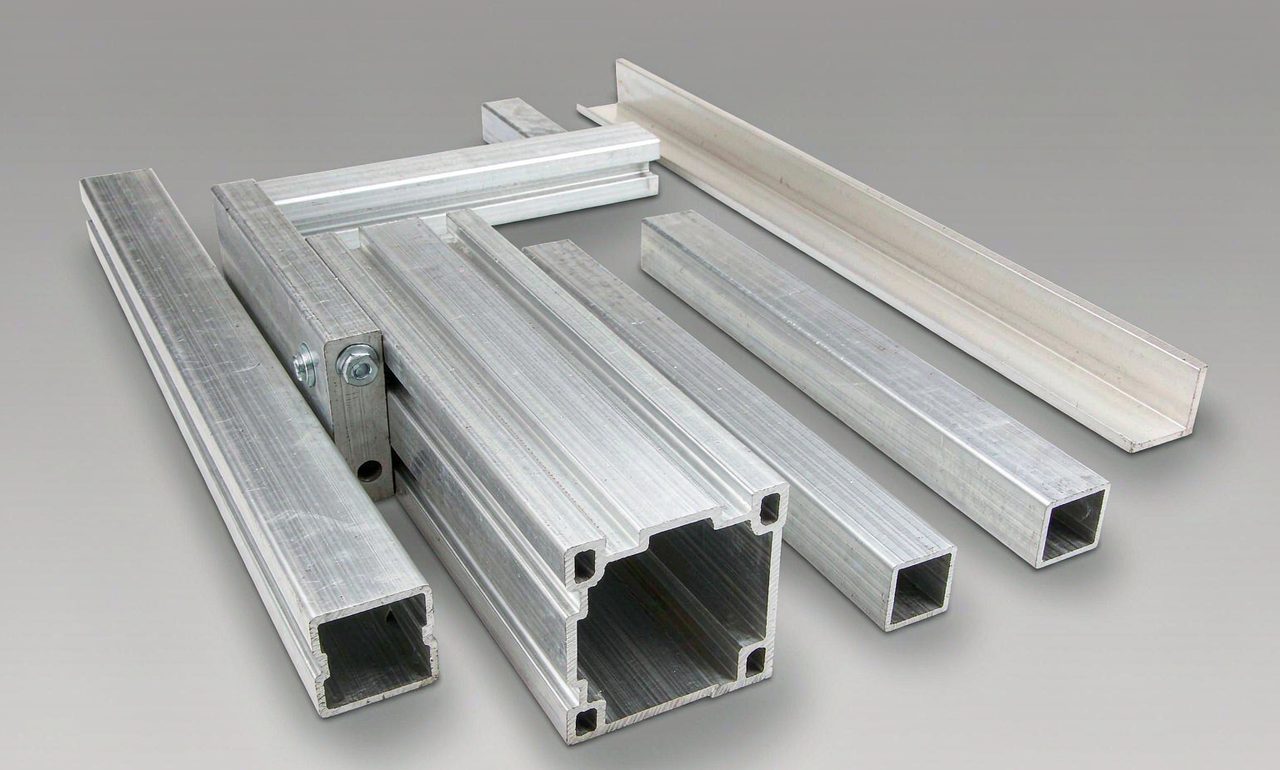
The profile cross-section is not an abstract characteristic but the result of a specific die. If you send a drawing of a non-standard cross-section, the manufacturer needs to assess how reproducible the geometry is in extrusion and how it combines with gaskets, hardware and insulated glass units. That is why it is useful to state not only dimensions in the technical brief but also the purpose of the node: opening method, finishing requirements and the intended method of joining elements. This reduces the number of clarifying questions before the commercial proposal is prepared.
The link between extrusion and finishing
Extrusion forms the geometry; finishing determines appearance and the protective properties of the surface. The coating decision is made before the batch is prepared: anodizing keeps the metallic texture, powder coating gives an agreed colour. For structures where the inner and outer faces look different, the finish of each side is discussed separately. Colour, texture and samples are agreed with the manager on request.
What this material does not contain
We deliberately do not give alloy grades, heating temperatures, pressing pressures, speeds, tolerances, wall or coating thicknesses, or equipment performance figures. These values relate to a specific production facility and configuration and are provided on request rather than in a general technical description. The material is also not a description of the company's products and does not replace a commercial proposal.
Frequently asked questions
Can you make a profile with a non-standard cross-section?
Yes, customer technical briefs and drawings are reviewed. The manager confirms whether a specific cross-section can be made after the sketch is agreed.
What determines the appearance of the finished profile?
The cross-section geometry set by the die and the chosen surface finish — anodizing or powder coating. Colour and texture are agreed on request.
Where are the process parameters listed?
They are not published in the reference material and are provided on request for a specific configuration.
Profile system catalogue
- Thermal-break profiles, casement systems
- Thermal-break profiles, sliding systems
- Casement systems without a thermal break
- Sliding systems without a thermal break
- Facade and curtain-wall profiles
- Industrial and universal profile
Reference materials
- Anodizing and Powder Coating: Choosing a Profile Finish
- How to Choose an Aluminium Profile for a Window, Door or Facade
From technology to your project
If you have a drawing or a description of the structure, send it: the manager will agree the cross-section and finish and prepare a commercial proposal.